Why Verification-First Enterprise Data Agents Turn AI Output into Auditable Decisions
How verification-first enterprise data agents turn AI output into auditable decisions: SQL validation, metric lineage, sign-off and rollback.

AI output becomes a business decision only when it carries executable evidence, independent checks, risk-tiered human approval and a rollback path. Verification is the mechanism that lets an enterprise act on data agents at scale, not the brake on them. The stakes are measurable: a study of 12,340 generated queries found that 37.3% contained errors (Shen et al., FSE 2026, retrieved 2026-10-20). Anthropic's account of how the Claude Code team does code review, published 15 October 2026, is prior-week coverage used here as an analogy only (Anthropic, retrieved 2026-10-20). What follows is a testable acceptance framework: four controls, the artifacts each one leaves behind, and eight questions a buyer can put to any vendor.
What Is a Verification-First Enterprise Data Agent?
A verification-first enterprise data agent is a system that treats every generated answer as a claim requiring evidence before it can inform a decision. The definition has four parts: executable evidence (the query ran and returned rows), independent checks (validation the generating model did not perform itself), risk-tiered human approval (the depth of review scales with consequence), and a rollback path (a bad action can be reversed within a known window).
The case for that structure starts with benchmark reality. An audit of text-to-SQL benchmarks found annotation error of 52.8% in BIRD Mini-Dev and 66.1% in Spider 2.0-Snow, meaning the yardsticks themselves were partly wrong (Jin, Choi, Zhu and Kang, CIDR 2026, retrieved 2026-10-20). After correcting annotations, relative execution-accuracy changes ranged from −3% to +31% and leaderboard rankings moved by up to three positions. If the measurement layer is that unstable, "the model looked right" cannot be the acceptance criterion. A verification-first agent replaces that judgment with artifacts a reviewer can inspect.
Anthropic's Code Review Process Is an Analogy, Not a Proof
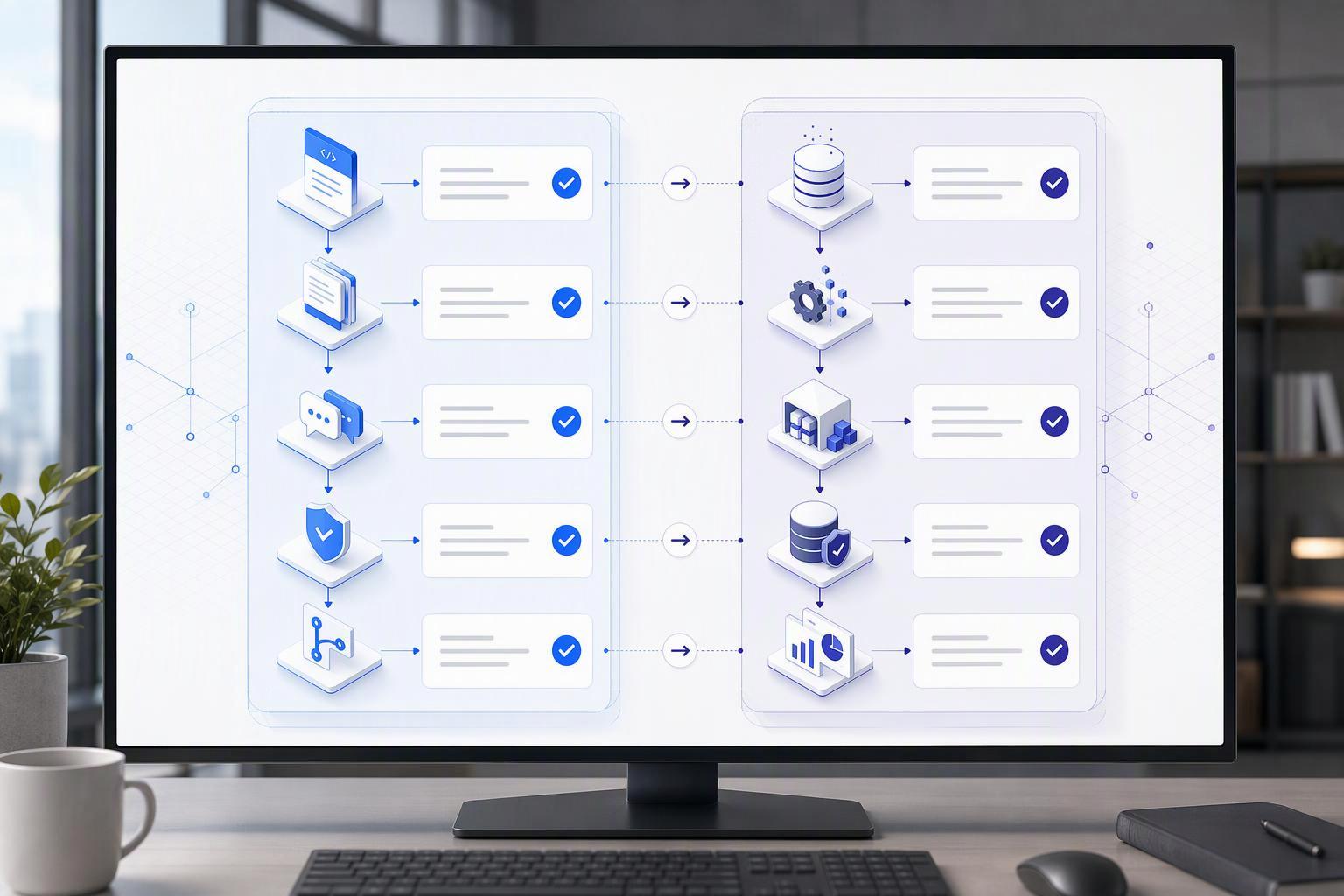
That structure has a useful precedent in software delivery, but only as a precedent. Anthropic's post describes four controls, and none of them is a claim about data platforms. First, the agent is given something it can run and asked to show output rather than assert completion. Second, findings are verified by other agents before humans review them, with a separate group voting on each finding. Third, risk tiers govern approval: low-risk changes need no human once automated review and security checks pass, medium needs one person, high needs two. Fourth, rollback is a designed control through merge queues, feature flags, staged releases and fast rollback (Anthropic, retrieved 2026-10-20).
The post also states its own limit, warning that humans must be able to say what the checks would miss. That caution is the honest boundary of the analogy. Anthropic documents a software delivery pipeline; it does not demonstrate that any data vendor has implemented equivalent controls, and it is not evidence of endorsement or of shipped capability.
The translation to data work is directional, not literal. Executable evidence maps to a query that runs against governed tables. Independent checks map to lint rules, tests and assertion results. Risk tiers map to decision classes. Rollback maps to snapshot-level recovery. What the analogy cannot supply is the error distribution of data work, which is why the benchmark figures matter: 47.8% of BIRD queries and 26.8% of Spider queries were erroneous in the same FSE 2026 study (Shen et al., retrieved 2026-10-20).
How Do You Validate AI-Generated SQL Before Anyone Trusts the Number?
Validation works when static linting and row-returning tests are run as complementary gates, not as substitutes. SQLFluff's rule set ships 79 rules in 11 categories, and the reference rules target exactly the failure modes that produce plausible but wrong numbers (SQLFluff rules reference, retrieved 2026-10-20). Rule RF02 requires references to be qualified when a select touches more than one table; RF01 rejects references to objects absent from the FROM clause; AM04 flags SELECT * as an unknown column count; AM05 requires fully qualified joins (SQLFluff reference rules, retrieved 2026-10-20).
Two limits matter for a buyer. RF01 and RF02 are not auto-fixable, and RF01 is disabled by default for Athena, BigQuery, Databricks, DuckDB, Hive, Redshift, SOQL and SparkSQL because of false positives, so "we run a linter" is only true if those rules were explicitly enabled. And linting checks form, not meaning: dbt data tests are select statements that return failing rows and pass only when zero rows come back, with four built-in generic tests (unique, not_null, accepted_values, relationships) (dbt data tests, retrieved 2026-10-20).
Automated repair is the weakest link. A rule-based repair method detected 47.0% of incorrect queries at 95.9% precision but repaired only 23.1%, with 5.3% mis-repair (Shen et al., retrieved 2026-10-20). Validate before rewriting, and treat any auto-fix as a change that needs its own evidence. A query can pass every rule and still answer the wrong business question, which is why a valid query can still answer the wrong question.
How Do Governed Metric Definitions and Lineage Make an Output Auditable?
An output is auditable when four artifacts travel with it: the SQL that ran, the version of the metric definition it used, the lineage edges connecting it to source columns, and a freshness assertion with a timestamp. Each proves something specific and nothing more.
Metric consistency is the pressure point. In a 2026 survey of 100 enterprise data leaders at companies with over 5,000 employees and $2B+ revenue, 99% said defining metrics separately in each BI or analytics tool is a challenge, and 68% use (37%) or are piloting (31%) an independent semantic layer (Strategy and CIO Dive Studio, retrieved 2026-10-20). The top obstacles to consistent definitions were inconsistent definitions across tools (42%) and across teams (37%) from the same study. Treat those as single-source figures from a 100-respondent sample.
The mechanism exists in open specifications. The dbt Semantic Layer defines metrics once, centrally, and routes requests to MetricFlow for dynamic SQL generation (dbt Semantic Layer FAQs, retrieved 2026-10-20), while MetricFlow semantic models carry entities, dimensions and measures in YAML that can be committed to git for review (About MetricFlow, retrieved 2026-10-20). Portability improved when the Open Semantic Interchange specification, now Apache Ossie, published v0.1 on 27 January 2026 and entered the Apache Incubator on 10 July 2026 (Apache Ossie updates, retrieved 2026-10-20).
Artifact | Proves | Does not prove |
|---|---|---|
SQL evidence | The query executed and returned rows | That the question was interpreted correctly |
Definition version | Which metric logic produced the number | That the definition is the one the business agreed |
Lineage edge | Which input columns fed the output | That the transformation is semantically right |
Freshness assertion | The data was loaded within threshold | That the data is complete or correct |
Lineage at column granularity comes from the OpenLineage specification, where a RunEvent records an observed state of a job run and a run ID must be a UUID (OpenLineage specification, retrieved 2026-10-20). The columnLineage facet, schema version 1-2-0, maps each output column to input fields with transformation types DIRECT or INDIRECT and subtypes including JOIN, GROUP_BY, FILTER and WINDOW (column-level lineage facets, retrieved 2026-10-20). Freshness needs configuration to mean anything: dbt's warn_after and error_after each require both count and period, and if neither is set, dbt does not check freshness for that resource (source freshness thresholds, retrieved 2026-10-20). That is the argument for one metric, one definition as a governance rule rather than a tooling preference.
When Should a Human Sign Off, and How Do You Roll Back a Bad Action?

Human sign-off should be assigned by decision class, not applied uniformly. The NIST AI Risk Management Framework treats human-AI configuration as a design spectrum, noting that some systems may not require human oversight while others specifically require it, and it places appeal and override mechanisms into post-deployment monitoring (NIST AI 100-1, retrieved 2026-10-20). That framing supports a matrix: low-consequence, reversible, internal reads proceed on green checks; medium-consequence outputs need one named reviewer; high-consequence or irreversible actions need two, and a defined set of paths always needs two.
Regulation sets a floor for high-risk systems. Article 14 of the EU AI Act requires effective oversight by natural persons, including the ability to disregard, override or reverse an output and to interrupt the system through a stop function (Article 14, retrieved 2026-10-20). The dates moved: the AI Omnibus entered into force on 27 July 2026, so Annex III high-risk rules now apply from 2 December 2027 and Annex I embedded high-risk from 2 August 2028 (European Commission, retrieved 2026-10-20). Any compliance sentence citing August 2026 is out of date.
Rollback is only real within its retention window. Iceberg's rollback procedures restore a table to a specific snapshot ID or to the snapshot current at a timestamp, and both invalidate cached Spark plans (Iceberg Spark procedures, retrieved 2026-10-20). But snapshots accumulate until expired, and snapshot expiration removes them from metadata so they are no longer available for time travel (Iceberg maintenance, retrieved 2026-10-20). Delta Lake's default time travel window is 30 days unless VACUUM runs or retention periods change, with log retention defaulting to 30 days and deleted-file retention to 7 days (Delta Lake time travel, retrieved 2026-10-20). Ask for the retention setting, not the rollback feature. Typed decisions are not trusted decisions without an override that survives audit.
But Doesn't Verification Slow Data Teams Down?
The strongest objection is that verification adds latency to a workflow whose value is speed, and the honest answer is that it does add a step. The question is whether that step costs more than the errors it prevents. In the repair study, methods that repaired every query without examining correctness introduced errors into 8.1% of already-correct queries, while the rule-gated approach repaired 727 queries with only 75 mis-repairs (Shen et al., retrieved 2026-10-20). Unchecked automation damages correct work.
Practice data points the same direction. McKinsey's 2025 State of AI survey, fielded from 25 June to 29 July 2025 across 1,993 respondents, found human-in-the-loop review as a defined practice at 65% of AI high performers versus 23% of others (McKinsey, retrieved 2026-10-20). That is a practice contrast, not proof that review causes performance.
Where the evidence stops: no primary survey measures how often enterprise AI analytics output required correction before a business decision, so the case rests on benchmark evidence and mechanism rather than an adoption statistic. The counterargument also has a real cost: a gate that blocks a routine question teaches teams to route around it, which is why risk tiers exist rather than blanket approval.
The Acceptance Checklist for Verification-First Enterprise Data Agents
The deliverable is eight questions a buyer can put to any vendor, scored pass, partial or fail, with the evidence each answer must include. A verification-first enterprise data agent should be able to answer all eight without a proof-of-concept rebuild.
Executable evidence. Does every generated answer return the SQL that ran and the rows it produced, stored where a reviewer can open them?
Independent checks. Which validations run outside the generating model, and are the reference rules enabled for your dialect rather than left at defaults?
Assertion coverage. Which columns carry unique, not_null, accepted_values or relationships tests, and who owns a failing test?
Definition version. Can the system show which metric definition version produced a number, and where that definition is version-controlled?
Lineage granularity. Does lineage reach column level with transformation types, or stop at table level?
Freshness assertion. Is a freshness threshold configured with both count and period, and does a breach block the answer or merely warn?
Approval matrix. Which decision classes require one reviewer, which require two, and who is named for each?
Rollback window. What is the snapshot or retention window, and what happens to reversibility after expiration?
Score each answer against the artifact it produces. A vendor that answers question five with a diagram but no facet schema is a partial. When the checklist is complete, talk to an expert about your evaluation criteria and pressure-test the scoring with your own decision classes.
Frequently Asked Questions
What is a verification-first enterprise data agent?
It is a data agent whose every output ships with the evidence needed to defend it: the query that ran, the validation it passed, the metric definition it used, and a named approver. The point is not a better answer but an auditable decision record.
Does this only apply to text-to-SQL?
No, though SQL is where the failure modes are easiest to see. Any agent that writes back to a warehouse, refreshes a dashboard, or triggers a downstream job needs the same gates. The controls scale with the blast radius of the action, not with the query language.
Does Anthropic's code review post prove a vendor has built this?
No. As noted above, it describes how one software team structures review, and it is useful only as an analogy for what data work could look like. It makes no claim about any data platform's shipped capabilities, so treat it as a design reference and ask vendors for their own evidence.
What does the EU AI Act actually require, and from when?
Article 14 requires effective human oversight for high-risk systems. The AI Omnibus, in force since 27 July 2026, moved the dates: Annex III high-risk obligations apply from 2 December 2027 and Annex I embedded high-risk from 2 August 2028 (European Commission, retrieved 2026-10-20). Whether a given data agent is high-risk depends on its use, so classify before you build.
We already invested in a semantic layer or a BI tool with its own definitions. Do we start over?
No. The requirement is a single governed source of metric definitions that the agent reads from, and an existing semantic layer can serve that role if the agent is wired to it rather than generating its own definitions. Audit the gap between what the BI tool defines and what the agent assumes, then close it.
How do we start without a re-platforming project?
Pick one decision the business already argues about, put the validation gates and sign-off in front of that single workflow, and measure whether the answer survives review. Expand only after the record holds up. Nothing in the checklist requires replacing the warehouse you run today.
Conclusion
Verification is what converts an AI answer into a decision an enterprise can defend. The evidence supports the structure: 37.3% of 12,340 generated queries contained errors, benchmark annotations themselves carried 52.8% and 66.1% error rates, and rule-based repair fixed only 23.1% of what it detected. Those figures do not argue for blocking data agents. They argue for four controls with artifacts behind each one: executable evidence, independent checks, risk-tiered approval and a rollback window you can name.
The practical next step is the eight-question checklist, scored against artifacts rather than demos. Where a vendor cannot show the artifact, record a partial and ask what would produce it. The framework is deliberately vendor-neutral, and an architecture built around a governed semantic layer is one candidate that could support it, which is why a semantic layer that makes answers testable is worth examining against the same eight questions.
Two limits belong in the record. No primary survey measures how often enterprise AI analytics output needed correction before a decision, so the case rests on benchmark evidence and mechanism. And the Anthropic post is an analogy from software delivery, not proof that any data platform has shipped these controls. Verification-first is a standard to hold vendors to, not a claim any vendor has already met.
About the publisher. Singdata is a Singapore-headquartered company that develops enterprise data agents on top of its AI-native lakehouse, and it sells that platform to enterprises. It has a commercial interest in how buyers evaluate data agents, so weigh its perspective accordingly. The guidance above does not depend on its products.