
Rethinking Shopping Journey Optimization
Optimize the shopping journey to boost retention, enhance personalization, and drive revenue. Learn strategies for seamless, customer-centric experiences.

The way people shop has changed dramatically. You’ve probably noticed how much more you expect from brands today—whether it’s personalized recommendations or the ability to shop seamlessly across devices. In fact, 73% of shoppers now expect their experiences to feel tailored to them. Businesses that fail to meet these expectations risk falling behind.
Why does this matter? Companies that focus on improving the shopping journey see real results. For example:
Brands using journey mapping often achieve 50% higher customer retention rates.
Personalized shopping experiences encourage customers to spend 140% more.
E-commerce businesses with optimized journeys generate 56% more cross-sell revenue.
It’s clear that shopping journey optimization isn’t just a buzzword—it’s a game-changer. By rethinking how you connect with your customers, you can turn their expectations into opportunities for growth.
Key Takeaways
Improving the shopping journey helps meet customer needs and grow sales.
Personalizing shopping makes customers spend more and stay loyal. Use data to customize every step of their experience.
Using many channels creates smooth shopping, keeping customers and boosting sales.
Always work on getting better. Study customer feedback and actions to improve their shopping experience.
Use new tools and train your team to handle future challenges in retail.
Understanding Shopping Journey Optimization
What Defines the Shopping Journey
The shopping journey is more than just a series of transactions. It’s the complete experience a customer has with your brand, from the moment they discover you to the point where they become loyal advocates. Think of it as a story, with each stage playing a crucial role in shaping how customers feel about your business.
To break it down, here are the key stages of the shopping journey:
Stage | Description |
|---|---|
Awareness | The initial engagement where customers first learn about the brand through various touchpoints. |
Consideration | Customers evaluate options and consider making a purchase based on their needs and preferences. |
Acquisition | The stage where the customer makes the purchase decision and completes the transaction. |
Service | Post-purchase support and customer service interactions that enhance the customer experience. |
Loyalty | Building long-term relationships with customers to encourage repeat purchases and brand advocacy. |
Each stage offers opportunities to connect with your audience. By understanding these phases, you can identify where customers might face challenges and how to improve their experience.
The Role of Optimization in Modern Retail
In today’s fast-paced retail world, optimization is the secret sauce that keeps your business competitive. Shopping journey optimization involves fine-tuning every step of the customer’s path to make it as smooth and enjoyable as possible.
Here’s what it typically includes:
Customer Journey Mapping: This visual tool helps you see the journey from your customer’s perspective, highlighting pain points and areas for improvement.
Data Collection and Analysis: Gathering insights from customer behavior allows you to make informed decisions.
Personalization: Tailoring experiences based on individual preferences makes customers feel valued.
Cross-Channel Consistency: Whether they’re shopping online or in-store, customers expect a unified experience.
Continuous Improvement: Optimization isn’t a one-time task. It’s an ongoing process of testing, learning, and refining.
When you optimize, you’re not just improving the customer experience—you’re also boosting your bottom line. Research shows that companies prioritizing customer experience generate 5.7 times more revenue than their competitors. That’s a clear sign of how impactful optimization can be.
Benefits of Optimizing the Shopping Journey
Why should you invest in shopping journey optimization? The benefits go far beyond happier customers. Let’s take a closer look:
Benefit | Description |
|---|---|
Better targeted and personalized campaigns. | |
Increased Customer Lifetime Value | A robust journey map helps in incentivizing recurring business. |
Actionable Data Insights | Strategic decisions are rooted in concrete data tied directly to customer behavior. |
Additionally, the market for customer journey analytics is projected to grow to $46,680 million by 2030, with a compound annual growth rate (CAGR) of 18.8%. This shows how businesses are increasingly recognizing the value of optimizing the shopping journey.
But it’s not just about numbers. When you optimize, you create experiences that customers remember. You build trust, loyalty, and a reputation for putting your audience first. That’s the kind of impact that keeps customers coming back—and telling their friends about you.
Key Strategies for Shopping Journey Optimization

Personalization Across Touchpoints
Personalization is no longer optional—it's what your customers expect. When you tailor experiences to their preferences, you make them feel valued. This can happen at every touchpoint, from the first ad they see to the post-purchase follow-up email.
Why does personalization matter? Research shows that 80% of consumers are more likely to buy when brands offer personalized experiences. On the flip side, 48% of shoppers leave websites due to poorly curated experiences. That’s a huge opportunity to stand out by getting personalization right.
Here’s how you can make it happen:
Use customer data to recommend products based on browsing history.
Offer personalized loyalty rewards. Did you know 73% of shoppers want this, but only 45% of brands deliver?
Send tailored emails with content that matches their interests.
Patagonia’s Worn Wear program is a great example. They created a personalized experience by promoting sustainable shopping. The program attracted over 11,000 attendees during its tour and achieved an 88% merchandise sell-through rate. That’s the power of connecting with your audience on a personal level.
Omnichannel Integration for Seamless Experiences
Your customers don’t think in terms of channels—they just want a smooth experience. Whether they’re shopping online, in-store, or through an app, they expect everything to work together seamlessly. That’s where omnichannel integration comes in.
Companies with strong omnichannel strategies retain 89% of their customers, compared to just 33% for those with weak strategies. And it’s not just about retention. Omnichannel shoppers spend 4% more in-store and 10% more online than single-channel customers.
Here’s what you can do to optimize your omnichannel approach:
Ensure your website, app, and physical store share the same inventory and pricing.
Allow customers to start a purchase on one channel and finish it on another.
Use tools like live chat to provide real-time support across platforms.
Target is a shining example of omnichannel success. By integrating its digital and physical stores, the company saw a 24.3% sales increase and 195% growth in digital sales. That’s proof that a seamless shopping journey can drive both satisfaction and revenue.
Agility in Adapting to Consumer Needs
The retail world moves fast, and so do your customers. Agility is your ability to adapt quickly to their changing needs. When you’re agile, you can respond to trends, fix issues, and keep your customers happy.
Metrics like Customer Satisfaction Score (CSAT) and Net Promoter Score (NPS) show how well you’re meeting customer expectations. High scores mean you’re doing something right, while low scores highlight areas for improvement.
Here’s how to stay agile:
Track user behavior with tools like Google Analytics. This helps you understand what’s working and what’s not.
Use A/B testing to experiment with different strategies. For example, Venture Harbour increased conversions by 743% by switching to a multi-step inquiry form.
Collect customer feedback regularly. It’s the best way to know what they want.
During the COVID-19 pandemic, Vogmask demonstrated agility by scaling up order processing by 900%. Despite the challenges, they maintained a 92% customer satisfaction rate. That’s the kind of flexibility that builds trust and loyalty.
Case Studies of Successful Optimization
When it comes to shopping journey optimization, seeing real-world examples can help you understand its impact. Let’s dive into some success stories that show how businesses transformed their customer experiences and achieved impressive results.
Residence Supply: Smarter Product Pages, Better Results
Residence Supply revamped its product pages using a Smart Product Optimizer. This tool helped them display the most relevant products to their customers. The result? A 17.4% increase in conversion rates and a 3.1% boost in revenue. By focusing on what their customers wanted, they turned browsing into buying.
Crown & Paw: Small Changes, Big Impact
Crown & Paw tested different homepage headlines and added a Dynamic Free Shipping bar. These small tweaks made a big difference. They saw a 16% jump in conversions and a 10% increase in revenue. This case proves that even minor adjustments can lead to major wins.
Goldelucks: Engaging Visitors with Smart Popups
Goldelucks took a creative approach by using Smart Popups and Dynamic Content. These tools kept visitors engaged and encouraged them to explore more. The results were remarkable—a 31.56% rise in conversions and a 66.2% surge in revenue. Their strategy shows how engaging content can turn casual visitors into loyal customers.
Varnish & Vine: Leveraging AI for Optimization
Varnish & Vine embraced AI-powered tools to optimize their product pages. They conducted extensive A/B testing to find what worked best. This effort led to a 12% increase in conversions and a 43% boost in revenue. Their story highlights the power of data-driven decisions.
Bukvybag: Reducing Bounce Rates with Clear Communication
Bukvybag focused on reducing bounce rates by highlighting their best-selling products and offering free shipping. While specific numbers weren’t available, their strategy successfully kept customers on their site longer. This case reminds you that clear communication can make all the difference.
Here’s a quick comparison of these success stories:
Case Study | Conversion Rate Increase | Revenue Increase | Description |
|---|---|---|---|
Residence Supply | 17.4% | 3.1% | Overhauled product pages using Smart Product Optimizer. |
Crown & Paw | 16% | 10% | A/B tested homepage headline and implemented a Dynamic Free Shipping bar. |
Varnish & Vine | 12% | 43% | Used AI-powered Smart Product Page Optimizer for extensive A/B testing. |
Goldelucks | 31.56% | 66.2% | Implemented Smart Popups and Dynamic Content to retain visitors and enhance engagement. |
Bukvybag | N/A | N/A | Highlighted best-selling products and communicated free shipping to reduce bounce rates. |
And here’s a visual representation of the conversion and revenue increases achieved by these brands:
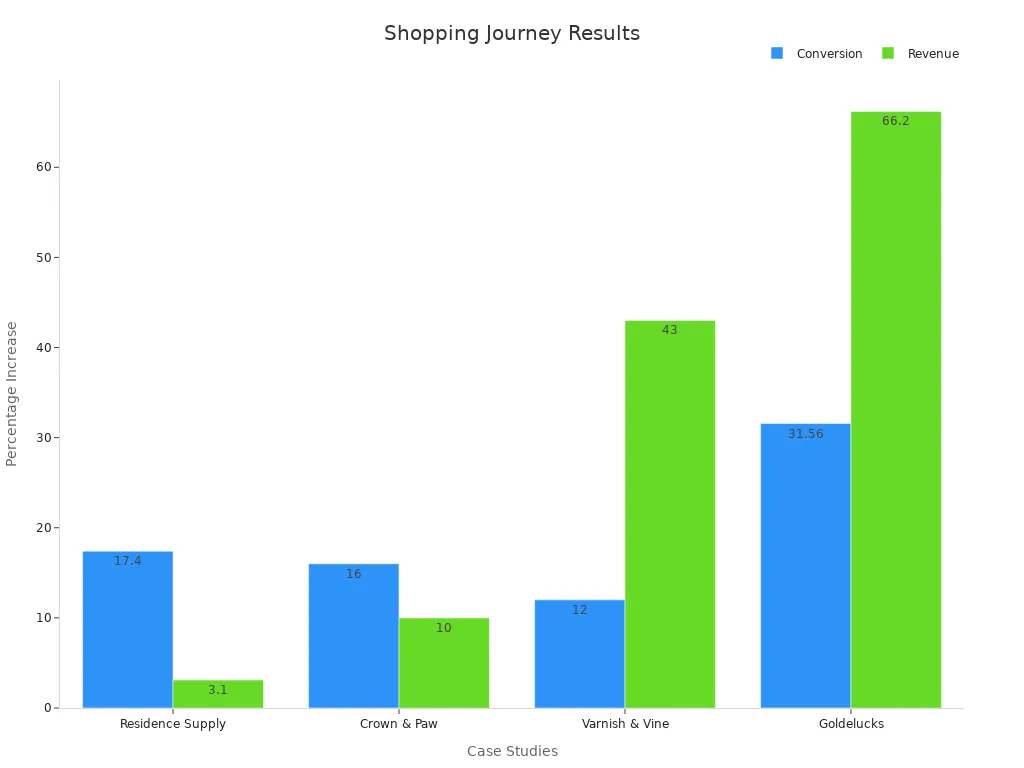
These examples show that shopping journey optimization isn’t just a theory—it’s a proven strategy that delivers results. Whether you’re tweaking your homepage, using AI tools, or engaging visitors with dynamic content, there’s always room to improve. The key is to focus on your customers’ needs and adapt your approach to meet them.
Addressing Challenges in Shopping Journey Optimization
Modernizing Outdated Systems
Outdated systems can slow you down. They make it harder to deliver the seamless experiences your customers expect. If your technology isn’t keeping up, you risk losing shoppers to competitors who offer faster, smarter solutions.
Modernizing your systems starts with understanding where the gaps are. For example, mapping the customer journey helps you identify areas that need improvement. It documents every interaction, showing you what works and what doesn’t.
Evidence Description | Key Insights |
|---|---|
Mapping the customer journey is essential for optimization. | It documents every customer interaction, identifying areas for improvement. |
Growth in 2023 was attributed to mobile commerce and promotional strategies. | These factors increased shopping occasions in a challenging economic environment. |
Investing in mobile-friendly platforms and promotional tools can also make a big difference. These strategies drove growth in 2023, even during tough economic times. By upgrading your systems, you’ll be ready to meet customer expectations and stay ahead of the curve.
Achieving Consistency Across Channels
Consistency is key. Your customers want the same experience whether they’re shopping online, in-store, or through an app. If your channels don’t align, it creates confusion and frustration.
To achieve consistency, focus on integrating your systems. Make sure inventory, pricing, and promotions match across all platforms. This helps customers trust your brand and makes their shopping journey smoother.
Evidence Description | Key Insights |
|---|---|
The 2024 Q4 shopping season presents a landscape of cautious optimism. | Consumer spending is projected to increase despite inflation challenges. |
With consumer spending expected to rise during the 2024 Q4 shopping season, consistency will be more important than ever. Shoppers will look for brands that offer reliable experiences, no matter where they shop.
Balancing Technology with Human Interaction
Technology is great, but it’s not enough on its own. Customers still value human interaction, especially for complex issues. Striking the right balance between tech and people can make or break your customer experience.
Here’s what studies show:
53% of consumers prefer to chat with a live agent for complex issues.
46% are comfortable with AI assisting human agents.
76% say a negative experience affects future brand choices.
You can use AI to handle simple tasks while letting human agents take care of more complicated ones. This approach keeps your customers happy and ensures they get the help they need. When you balance technology with personal touch, you build trust and loyalty that lasts.
Solutions to Common Optimization Barriers
Every business faces hurdles when it comes to improving the shopping experience. The good news? These barriers aren’t insurmountable. With the right strategies, you can overcome them and create a smoother journey for your customers.
One common challenge is identifying where things go wrong. Mapping the customer journey is a great way to pinpoint pain points. It lets you see the entire experience through your customers’ eyes. For example, you might discover that your checkout process is too complicated, leading to abandoned carts. Streamlining this step can make a big difference. A simple, fast checkout keeps customers from leaving before completing their purchase.
Another barrier is the lack of personalization. Customers expect recommendations that feel tailored to them. Using data analytics can help you understand their preferences and offer products they’re more likely to love. Personalized suggestions not only improve the shopping experience but also boost your sales.
Post-purchase support is another area where businesses often fall short. Don’t underestimate its importance. When you provide excellent support after the sale, you build loyalty. Customers are more likely to return and even recommend your brand to others. As one expert put it, “Post-purchase support is critical to fostering loyalty, reducing churn, and turning first-time buyers into repeat customers.”
Finally, technology can be both a solution and a challenge. AI tools can optimize the timing of your interactions and identify key moments to engage customers. This can significantly improve conversion rates. But remember, technology works best when paired with a human touch. A balance between the two ensures your customers feel valued.
By addressing these barriers, you’ll not only improve the shopping journey but also strengthen your relationship with your customers. Shopping Journey Optimization isn’t just about fixing problems—it’s about creating opportunities for growth.
Future Trends in Shopping Journey Optimization
AI and Machine Learning in Retail
AI and machine learning are reshaping how you shop. These technologies help retailers predict what you want before you even know it. They analyze your behavior, preferences, and past purchases to create hyper-personalized experiences. Imagine walking into a store or visiting a website where everything feels tailored just for you. That’s the magic of AI.
Retailers are adopting AI at a rapid pace. In 2019, only 48% of companies used AI, but by 2023, that number jumped to 79%. The market for AI in retail is also booming, growing from $5.9 billion in 2022 to a projected $55.5 billion by 2030, with an impressive CAGR of 28.7%.
Market Size (2022) | Projected Market Size (2030) | CAGR (%) |
|---|---|---|
$5.9 billion | $55.5 billion | 28.7 |
AI doesn’t just enhance your shopping experience. It also helps retailers streamline operations, optimize inventory, and make smarter decisions in real time. This creates a win-win situation for both you and the brands you love.
Leveraging Data Analytics for Personalization
Data analytics is the backbone of personalized shopping. It allows retailers to understand your preferences and deliver exactly what you need. For example, analytics can help predict demand, ensuring that the products you want are always in stock. It also improves supply chain efficiency, so you get your orders faster.
Retailers using data-driven personalization see significant benefits. They can create targeted marketing campaigns, improve customer retention, and even boost their bottom line. Here’s a quick look at how analytics transforms retail:
Statistic | Description |
|---|---|
1 | Personalization has become a key strategy for improving customer engagement. |
2 | Data-driven personalization leads to better conversion rates and loyalty. |
3 | Analytics helps retailers make smarter decisions, enhancing your experience. |
When retailers use data effectively, they don’t just meet your expectations—they exceed them. This makes your shopping journey smoother and more enjoyable.
Innovations in Consumer-Centric Retail
Retail is evolving to put you at the center of every decision. Companies are focusing on creating experiences that feel personal, seamless, and engaging. Generative AI, for instance, is taking personalization to the next level by crafting unique shopping experiences in real time.
Other innovations include digitally connected ecosystems that integrate online and offline shopping. These systems ensure that your journey feels consistent, no matter where or how you shop. Retailers are also using agile methodologies to deliver new features faster, keeping up with your changing needs.
Metric | Statistic |
|---|---|
Year-over-year growth | 41% higher for structured measurement frameworks (Deloitte, 2022) |
Marketing ROI | 126% higher for retailers using advanced analytics (McKinsey, 2022) |
Feature delivery speed | 31% faster for teams using agile methodologies (Gartner, 2022) |
Ecommerce revenue growth | 28% higher for organizations with digital skills development (Capgemini, 2022) |
Revenue from new products | 49% more for companies with structured innovation programs (BCG, 2022) |
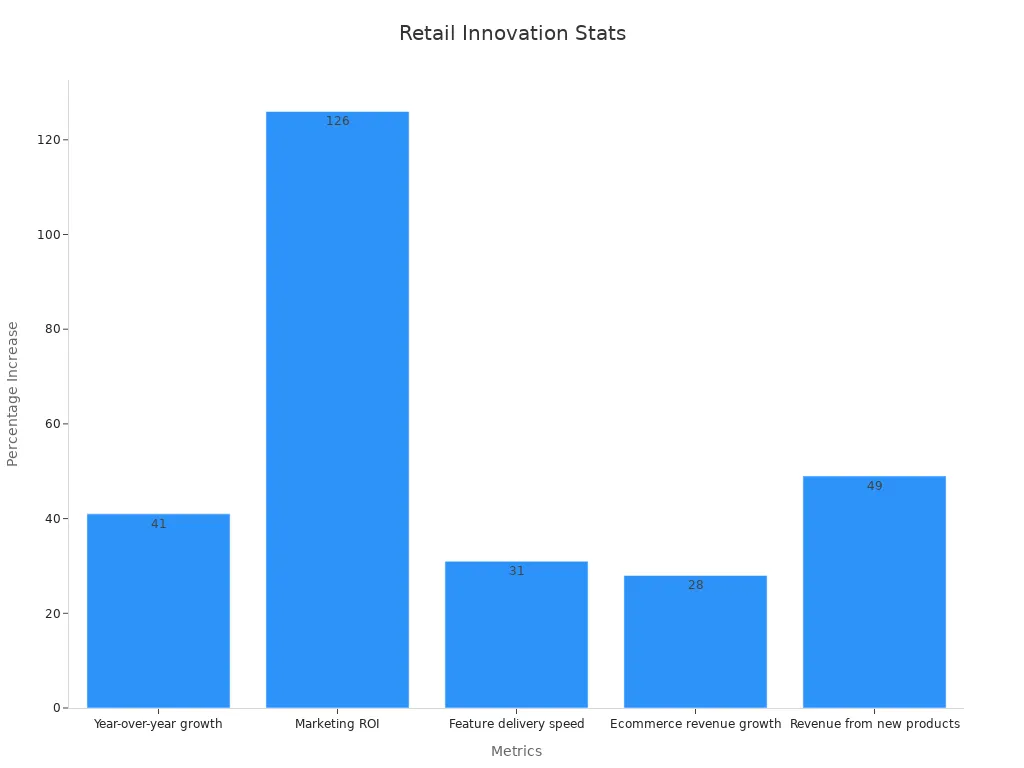
These advancements show how much effort goes into making your shopping journey better. As technology continues to evolve, you can expect even more exciting changes in the future.
Preparing for Emerging Retail Technologies
Emerging technologies are reshaping the retail world faster than ever. To stay ahead, you need to prepare for these changes and adapt quickly. But here’s the challenge—many businesses struggle to keep up. Are you ready to embrace the future of retail?
Let’s start with the numbers. Nearly 97% of retail brands agree that consumer behavior is evolving rapidly. Yet, only 39% feel confident about engaging customers effectively. Why? Many still rely on outdated systems, with over half using legacy platforms for marketing automation. This slows down their ability to respond to trends and customer needs.
Statistic | Percentage |
|---|---|
Retail brands that agree consumer behavior is evolving rapidly | 96.8% |
Retail brands that feel well-prepared to engage customers | 38.9% |
Retail brands using a legacy platform for marketing automation | 55.8% |
Retail brands that recognize the importance of speed and agility | 63.2% |
Retail brands that have organizational processes to adapt quickly | 49.5% |
Retail brands that believe their teams have the right skills | 44.2% |
Retail brands that take over 4 weeks to launch a campaign | 32.6% |
Retail brands that take more than 2 weeks to gather customer insights | 34.7% |
So, how can you prepare? Start by investing in tools that enhance speed and agility. For example, AI-powered platforms can help you gather customer insights in days instead of weeks. This allows you to launch campaigns faster and respond to market changes effectively. Training your team is just as important. Only 44% of retail brands believe their teams have the right skills. Upskilling your workforce ensures they’re ready to use new technologies to their full potential.
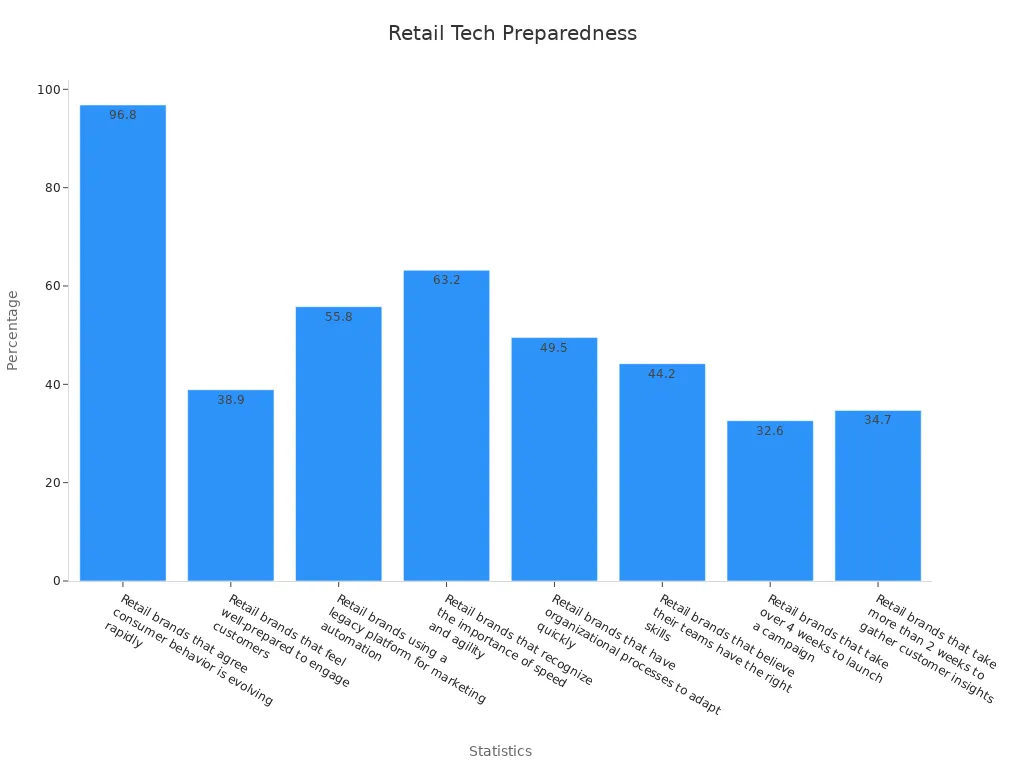
The future of retail belongs to those who can adapt. By modernizing your systems, training your team, and embracing emerging technologies, you’ll be ready to meet your customers’ expectations—and exceed them. The question is, are you ready to take the leap?
Rethinking shopping journey optimization isn’t just a trend—it’s essential for staying ahead. By focusing on your customers’ needs and refining their experience, you can build loyalty and drive growth. Small, ongoing improvements keep your business competitive and help you adapt to fast-changing markets.
Continuous innovation avoids obsolescence in dynamic industries.
Data-driven strategies enhance marketing agility, giving you a long-term edge.
Evidence Type | Findings |
|---|---|
Data-driven innovation | Boosts marketing agility and competitive advantage |
Marketing agility | Strengthens your ability to adapt over time |
Market turbulence | Increases the need for agility to stay ahead |
Stay proactive, embrace change, and keep innovating. Your customers—and your bottom line—will thank you.
FAQ
What is shopping journey optimization, and why does it matter?
Shopping journey optimization means improving every step of your customer’s experience, from discovery to loyalty. It matters because a smooth, personalized journey keeps customers happy, builds trust, and boosts your sales. Think of it as creating a path that’s easy and enjoyable to follow.
How can small businesses start optimizing their shopping journey?
Start small! Map your customer’s journey to spot pain points. Use tools like Google Analytics to track behavior. Focus on quick wins, like simplifying checkout or personalizing emails. Even small changes can make a big difference in how customers feel about your brand.
What’s the difference between omnichannel and multichannel strategies?
Omnichannel creates a seamless experience across all platforms, while multichannel focuses on offering multiple ways to shop. For example, omnichannel lets customers start online and finish in-store. Multichannel might offer both options but without connecting them. Omnichannel is about integration, not just availability.
How does AI improve the shopping journey?
AI predicts what your customers want by analyzing their behavior. It personalizes recommendations, optimizes inventory, and even automates customer support. This makes shopping faster, easier, and more enjoyable for your customers while helping you save time and resources.
What’s the biggest challenge in shopping journey optimization?
Consistency! Customers expect the same experience everywhere—online, in-store, or on an app. If your systems don’t align, it creates confusion. Focus on integrating inventory, pricing, and promotions across channels to build trust and keep customers coming back.
See Also
Revolutionizing Retail: How AI Enhances Shopping Journeys
Analyzing User Behavior Data: Insights Retailers Often Miss
Understanding Route Optimization: Algorithms for Speedy Deliveries
Creating A Unified Customer Profile Across All Platforms
SKU Rationalization Through Data: Essential Frameworks And Metrics