Integrating EOS with ERP & WMS
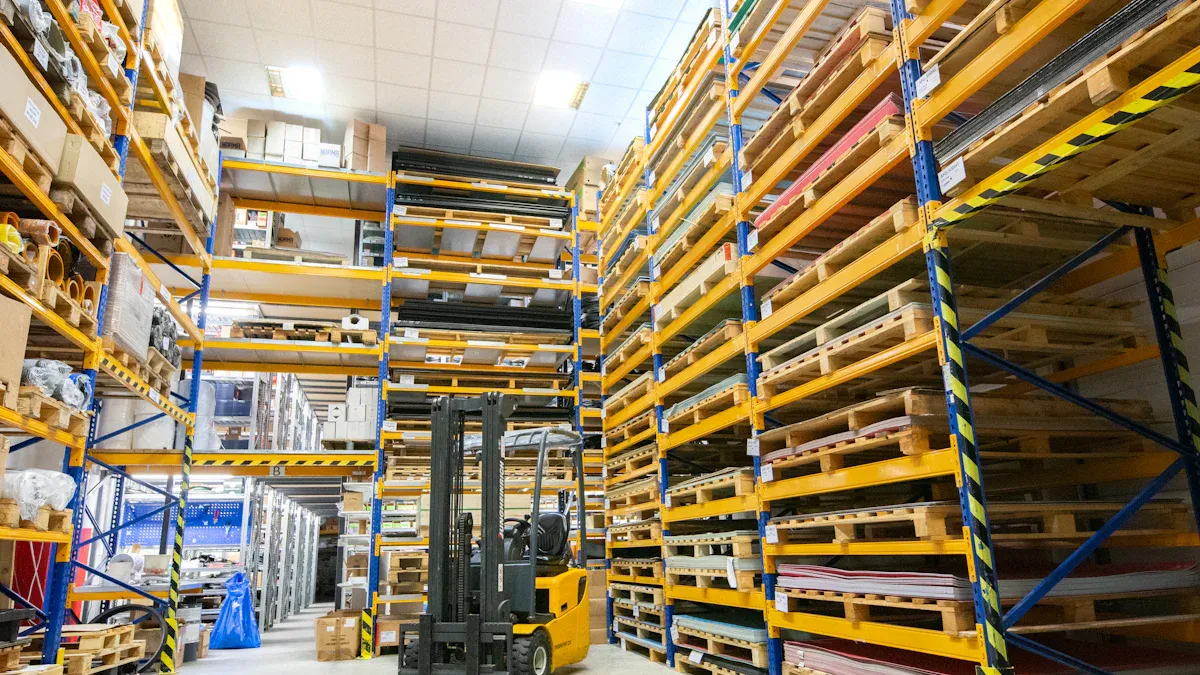
Integrating EOS with ERP and WMS is essential for optimizing business operations. You can streamline workflows, enhance efficiency, and reduce errors by connecting these systems. Modern integration methods offer significant opportunities. For example, cloud-based solutions improve scalability and accessibility, while blockchain ensures secure and transparent data exchange. Low-code platforms empower your team to build integrations quickly, even without technical expertise. Additionally, interconnected systems, as emphasized in Industry 4.0, enable real-time data flow, boosting operational performance. Addressing challenges like legacy system compatibility or data security through modular approaches ensures smooth and secure integration.
Key Takeaways
Combining EOS with ERP and WMS makes work easier and faster. It reduces mistakes and improves how businesses run.
Seeing real-time data helps make quick decisions and manage stock better. This gives companies an advantage over others.
Using automation cuts down on manual work, saves money, and increases productivity. Teams can then focus on more important tasks.
Solving compatibility and data transfer issues early makes the process smoother and keeps data accurate.
Regular checks and support are key for success. They help businesses adjust to changes and keep systems working well.
Key Components of Integrating EOS
Defining EOS and its role in business operations
EOS (Entrepreneurial Operating System) serves as a framework to help businesses streamline their operations and achieve sustainable growth. It focuses on aligning vision, processes, and accountability within an organization. For example, in the manufacturing sector, EOS has proven effective in improving quality control and addressing challenges unique to industries like automotive and aerospace. Similarly, companies in the food and beverage industry have reported increased efficiency and profitability by adopting EOS tools like the Accountability Chart. These tools foster a culture of clarity and responsibility, enabling better decision-making and faster problem-solving.
An empirical analysis of the EOS blockchain highlights critical components for effective integration, such as system architecture, decentralization, and performance metrics. However, challenges like low account activity and limited governance participation must also be addressed. Understanding these factors is essential for businesses aiming to integrate EOS successfully into their operations.
ERP functionalities and their impact on enterprise management
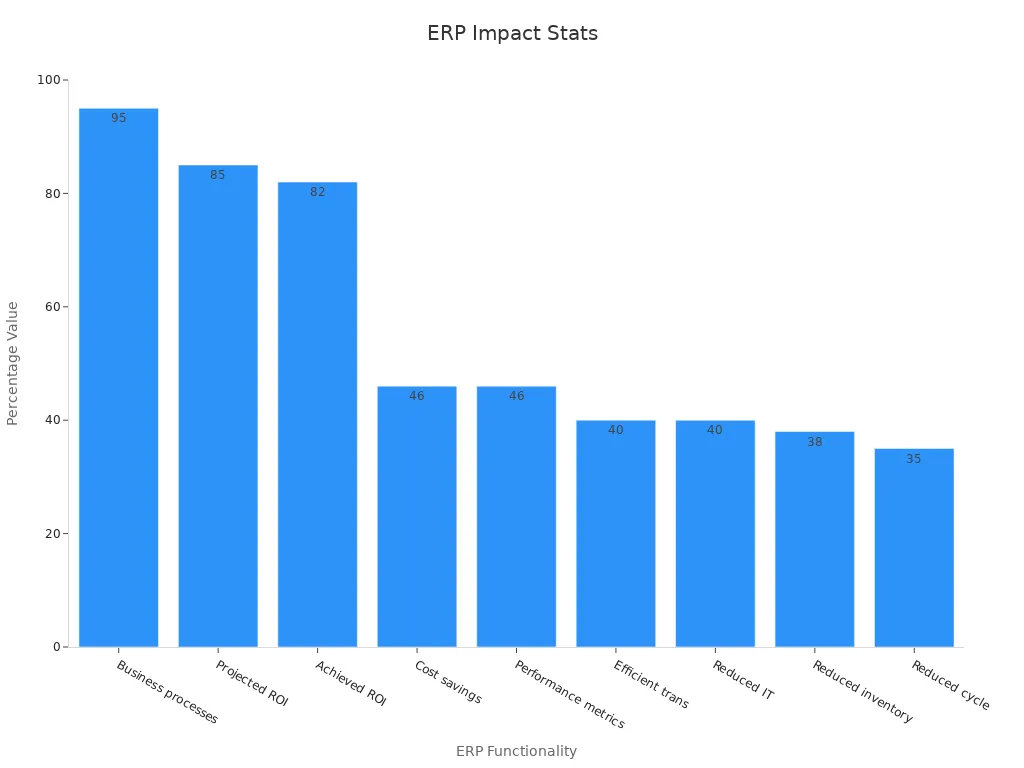
Enterprise Resource Planning (ERP) systems play a vital role in managing core business processes. They centralize data, streamline workflows, and improve decision-making. Statistics show that 95% of businesses report improved processes after implementing ERP systems, while 78% experience enhanced productivity. Additionally, 91% of companies optimize inventory levels, and 70% improve customer experiences through ERP functionalities.
ERP systems also deliver measurable ROI. For instance, 85% of companies achieve their projected ROI timelines, with an average ROI time of 2.5 years. These systems reduce IT costs, improve compliance, and enhance supplier interactions, making them indispensable for enterprise management.
WMS and its significance in warehouse efficiency
Warehouse Management Systems (WMS) are critical for optimizing warehouse operations. They provide tools for inventory control, automate manual tasks, and improve order accuracy. For example, a WMS can track stock levels and automatically replenish inventory when needed, ensuring seamless order fulfillment. It also enhances operational efficiency by directing put-away and picking processes, which reduces errors and increases productivity.
A WMS contributes to cost savings by minimizing inventory carrying costs and optimizing stock levels. It also improves inventory visibility, giving businesses a competitive edge. By automating tasks like data entry and inventory counting, a WMS allows your team to focus on higher-value activities, ultimately boosting overall efficiency.
Evidence | Description |
|---|---|
Inventory Control | A WMS provides tools to manage inventory levels effectively. |
Operational Efficiency | It improves order accuracy and inventory visibility. |
Cost Reduction | Optimizes stock levels and minimizes carrying costs. |
Automation | Automates tasks like data entry and inventory counting. |
Tracking | Ensures accurate tracking of products during put-away and picking. |
Replenishment | Automatically replenishes inventory when needed. |
Order Fulfillment | Maintains inventory levels to fulfill customer orders without delays. |
Step-by-Step Integration Process
Preparation: Identifying business needs and integration goals
Preparation is the foundation of a successful integration process. You need to start by analyzing your business needs and defining clear integration goals. This step ensures that the integration aligns with your organization's objectives and addresses specific challenges. For example, if your company struggles with inventory inaccuracies, integrating EOS with ERP and WMS can help improve data visibility and operational accuracy.
Begin by conducting a thorough assessment of your current systems. Identify gaps in functionality and areas where integration can add value. Collaborate with stakeholders to gather insights and prioritize goals. This approach ensures that everyone is aligned and focused on achieving measurable outcomes. By clearly defining your needs, you set the stage for a seamless integration process.
Tip: Use tools like SWOT analysis to evaluate strengths, weaknesses, opportunities, and threats in your current systems. This helps you pinpoint areas that require improvement.
Planning: Selecting tools and creating a roadmap
Planning is where you turn your goals into actionable steps. You need to select the right tools and create a detailed roadmap to guide the integration process. A structured framework, such as the Opportunity-Feasibility Matrix, can help you evaluate potential tools based on their feasibility and impact. Visual tools like the 2x2 Matrix (Bubble Chart) are also effective for prioritizing tasks and managing portfolios.
Framework Type | Description | Application |
|---|---|---|
Opportunity-Feasibility Matrix | Evaluates opportunities against feasibility | Enhances decision-making in tool selection |
2x2 Matrix (Bubble Chart) | Visualizes portfolio management | Supports strategic analysis and prioritization |
Your roadmap should be holistic and flexible, allowing for the integration of various tools and outputs. This approach addresses common issues like conflicting strategies and poorly integrated innovation management tools. Include key aspects such as structured implementation, goal setting, and alignment of vision and processes. These elements ensure that your roadmap provides clear direction and keeps the integration process on track.
Key Elements of a Roadmap:
Layer mapping for system compatibility.
Contents mapping to ensure data integrity.
Opportunity finding to identify areas for improvement.
The EOS Model emphasizes defining vision, building accountability, and setting up scorecards. Regular meetings ensure consistent execution and help teams stay focused on their objectives. Clear and intentional goal-setting transforms results and empowers teams, making it a critical part of the planning phase.
Implementation: Executing the integration strategy
Implementation is where your plans come to life. You need to execute the integration strategy with precision to ensure success. Focus on aligning your systems, processes, and teams toward shared goals. Performance metrics play a crucial role in tracking progress and measuring success during this phase.
Component | Description | Purpose |
|---|---|---|
Vision | Ensures alignment toward a shared future | Measures clarity and direction |
People | Determines if the right roles are filled | Assesses team alignment and capability |
Data | Replaces opinions with facts | Evaluates data-driven decision-making |
Issues | Measures problem-solving efficiency | Assesses how effectively challenges are addressed |
Process | Evaluates core process documentation | Ensures consistency and efficiency |
Traction | Confirms discipline and execution | Measures implementation effectiveness |
During implementation, focus on documenting core processes and ensuring they are followed consistently. Replace opinions with data to drive decision-making and solve issues efficiently. Regularly assess whether the right people are in the right roles to maintain team alignment. By tracking metrics like traction and vision, you can confirm that your integration strategy is delivering results.
Note: Continuous monitoring and feedback loops are essential during implementation. They help you identify areas for improvement and ensure long-term success.
Monitoring: Ensuring system performance and continuous improvement.
Monitoring plays a critical role in ensuring the success of your integration efforts. It allows you to track system performance, identify inefficiencies, and implement improvements. By consistently evaluating your integrated systems, you can maintain optimal performance and adapt to changing business needs.
Key Metrics to Track System Performance
To monitor effectively, you need to focus on measurable indicators that provide actionable insights. These metrics help you assess whether your systems are functioning as intended and where adjustments are necessary. Below is a table of essential metrics to guide your monitoring efforts:
Metric | Description |
|---|---|
Cycle time | Time taken to complete a process cycle. |
Yield rate | Percentage of products that meet quality standards. |
Defect rate | Rate of defective products produced. |
Overall Equipment Effectiveness (OEE) | Measure of how effectively a manufacturing operation is utilized. |
Return On Investment (ROI) | Measure of the profitability of an investment. |
Tracking these metrics ensures that your integration delivers tangible results. For example, monitoring cycle time can reveal bottlenecks in your processes, while analyzing defect rates helps you maintain product quality. By focusing on these indicators, you can make data-driven decisions to enhance system performance.
Tip: Use automated dashboards to visualize these metrics in real-time. This approach simplifies tracking and helps you respond quickly to any deviations.
Continuous Improvement Through Standardized Tools
Consistent monitoring is not just about identifying problems; it’s also about fostering long-term improvement. Standardized tools, such as balanced scorecards, can help you evaluate both the implementation and impact of your integration. These tools provide a structured way to measure outcomes and hold teams accountable for performance.
Evidence Type | Description |
|---|---|
Standardized Tools | Tools that measure integration outcomes, enhancing performance and accountability. |
Balanced Scorecard | A framework for evaluating implementation and impact comprehensively. |
Evaluation for Accountability | A method to identify effective strategies and barriers in integration efforts. |
By incorporating these tools into your monitoring process, you can ensure a thorough assessment of your systems. For instance, a balanced scorecard allows you to evaluate key performance areas, such as financial outcomes, customer satisfaction, and internal processes. This holistic approach ensures that your integration remains aligned with your business goals.
Building a Culture of Continuous Monitoring
Effective monitoring requires more than just tools and metrics. It demands a culture of accountability and continuous improvement. Encourage your team to regularly review performance data and suggest enhancements. Schedule periodic evaluations to ensure that your systems evolve alongside your business needs.
Note: Continuous monitoring is not a one-time effort. It’s an ongoing process that ensures your systems remain efficient and adaptable over time.
By prioritizing monitoring, you can unlock the full potential of your integrated EOS, ERP, and WMS systems. This commitment to continuous improvement will not only enhance operational efficiency but also position your business for sustained growth.
Benefits of Integrating EOS with ERP & WMS

Real-time data visibility across systems
Real-time data visibility transforms how you manage operations. It allows you to access accurate, up-to-date information across your systems, enabling faster and more informed decisions. For example, when your ERP and WMS systems are integrated with EOS, you can monitor inventory levels, track shipments, and analyze sales trends without delays. This seamless flow of data eliminates guesswork and ensures that your team always has the information they need.
The impact of real-time data visibility is evident across industries. In healthcare, it reduces duplicate laboratory tests by 87% and improves provider satisfaction with data availability by 92%. Retail businesses experience a 35% improvement in inventory accuracy and a 28% increase in cross-channel purchases. Financial services benefit from a 60% reduction in time-to-market for new services and $15M annual savings from operational efficiency.
Context | Evidence |
|---|---|
Healthcare | |
92% provider satisfaction with data availability | |
23-minute average reduction in emergency department wait times | |
Estimated $27M annual savings from improved care coordination | |
Retail | 28% increase in cross-channel purchases |
35% improvement in inventory accuracy | |
17% reduction in order fulfillment costs | |
4.2-point improvement in customer satisfaction scores | |
Financial Services | 60% reduction in time-to-market for new services |
50% decrease in integration-related incidents | |
$15M annual savings from operational efficiency | |
Enabled partnerships with 200+ fintech companies |
By integrating EOS with ERP and WMS, you unlock the potential of real-time data visibility, giving your business a competitive edge.
Improved operational accuracy and inventory management
Operational accuracy and inventory management are critical for business success. Integrating EOS with ERP and WMS enhances these areas by automating processes and reducing human errors. For instance, your WMS can track stock levels and automatically replenish inventory, ensuring that you never run out of essential items. ERP systems complement this by centralizing data, making it easier to identify discrepancies and optimize workflows.
Automation plays a key role in improving accuracy. Tasks like inventory counting and order processing become faster and more reliable. This reduces errors and ensures that your customers receive the right products on time. Additionally, better inventory management minimizes carrying costs and prevents overstocking, saving you money.
When your systems work together, you gain full visibility into your operations. You can monitor stock levels, track shipments, and analyze trends in real-time. This unified approach improves efficiency and helps you make smarter decisions about inventory and resource allocation.
Enhanced decision-making through unified data insights
Unified data insights empower you to make better decisions. When EOS, ERP, and WMS systems are integrated, they consolidate data from different sources into a single platform. This eliminates silos and provides a comprehensive view of your operations. You can analyze trends, identify opportunities, and address challenges with greater precision.
Data-driven organizations achieve remarkable results. They are 23 times more likely to acquire customers, six times more likely to retain them, and 19 times more likely to be profitable. Businesses using big data report an 8% increase in profit and a 10% reduction in costs. Walmart optimizes stock levels using AI-driven inventory systems, while JP Morgan Chase prevents fraud with predictive analytics. Netflix drives 80% of user engagement by recommending content based on viewing data.
90% of enterprise analytics professionals believe data is key to digital transformation.
Data-driven organizations are 23 times more likely to acquire customers.
They are six times more likely to retain customers and 19 times more likely to be profitable.
Businesses using big data report an 8% increase in profit and a 10% reduction in costs.
69% of companies noted better strategic decisions due to data usage.
Unified data insights not only enhance decision-making but also position your business for long-term growth. By integrating EOS with ERP and WMS, you create a foundation for smarter, data-driven strategies.
Cost savings and increased productivity.
Integrating EOS with ERP and WMS delivers measurable cost savings and boosts productivity across your operations. By automating processes and streamlining workflows, you can reduce expenses while maximizing output. This integration eliminates inefficiencies, allowing your business to operate more effectively.
How Integration Reduces Costs
When you integrate these systems, you unlock opportunities to cut costs in multiple areas. For example:
Lower input costs: Automation reduces the need for manual labor, saving money on wages and training.
Reduced overhead expenses: Integration optimizes resource usage, lowering costs for rent, utilities, and office supplies.
Decreased inventory costs: Real-time inventory tracking prevents overstocking and minimizes carrying costs.
Research shows that businesses with higher IT investment and utilization achieve greater economic efficiency. A one standard deviation increase in IT investment improves efficiency by 0.521 standard deviations. Similarly, better utilization leads to a 0.464 standard deviation improvement. These gains highlight the financial benefits of integrating EOS with ERP and WMS.
Tip: Use the cost savings from integration to reinvest in growth initiatives, such as expanding your product line or entering new markets.
Boosting Productivity Through Automation
Automation is a game-changer for productivity. By integrating EOS with ERP and WMS, you can automate repetitive tasks like inventory counting, order processing, and data entry. This frees up your team to focus on higher-value activities, such as strategic planning and customer engagement.
Here’s how automation enhances productivity:
Faster task completion: Automated systems handle tasks in seconds, reducing delays.
Improved accuracy: Automation eliminates human errors, ensuring consistent results.
Enhanced collaboration: Integrated systems provide a unified platform for teams to share information and work together seamlessly.
For example, a warehouse using an integrated WMS can process orders 30% faster than one relying on manual methods. This speed translates into quicker deliveries and happier customers.
The Long-Term Impact on Your Business
Cost savings and productivity gains don’t just improve your bottom line—they also position your business for long-term success. With lower expenses and more efficient operations, you can scale your business without overextending resources. Additionally, the time saved through automation allows you to innovate and stay ahead of competitors.
Note: Regularly evaluate your systems to ensure they continue delivering value. Small adjustments can lead to even greater savings and productivity over time.
By integrating EOS with ERP and WMS, you create a foundation for sustainable growth. The financial and operational benefits make this investment one of the smartest moves for your business.
Addressing Challenges in Integration
Resolving compatibility issues between systems
Compatibility issues often arise when integrating EOS with ERP and WMS. These systems may use different architectures, protocols, or data formats, creating barriers to seamless communication. You can address these challenges by conducting a thorough compatibility assessment before integration. This involves identifying mismatched components and selecting tools that bridge the gaps. Middleware solutions, for example, act as translators between systems, ensuring smooth data exchange.
Standardizing data formats also plays a key role. When systems share a common language, they can process information more efficiently. Additionally, modular integration approaches allow you to connect systems incrementally, reducing the risk of errors. By focusing on compatibility early in the process, you set the stage for a successful integration.
Tip: Collaborate with IT specialists to identify compatibility issues and implement solutions tailored to your business needs.
Ensuring data migration and integrity
Data migration is a critical step in system integration. Moving data from legacy systems to new platforms requires careful planning to avoid disruptions. You must ensure that the migration process maintains data accuracy and system integrity. Testing methodologies, such as functionality tests with sample data, help verify that the new system performs as expected. Performance testing ensures migration does not slow down operations, while rollback testing provides a safety net in case of failure.
Strategy/Practice | Description |
|---|---|
Testing Methodologies | Carry out functionality-related tests with various data samples. |
Performance Testing | Ensure migration does not degrade system performance. |
Rollback Testing | Revert to the legacy system if migration fails, minimizing disruption. |
Data Quality Checks | Improve data quality to meet business standards and avoid post-migration issues. |
Delta Migration | Capture and migrate new data while the source platform remains active. |
Communication Plan | Establish clear communication among stakeholders to manage expectations. |
Proactively mapping risks and designing backup plans further ensures a smooth migration. Thorough testing before and after migration guarantees data accuracy and functionality. By prioritizing these strategies, you can safeguard your systems and maintain operational continuity.
Training employees for system adaptation
Employee training is essential for successful system integration. When your team understands how to use the new systems, they can adapt quickly and maximize productivity. Training programs should focus on hands-on learning, allowing employees to practice using the integrated EOS, ERP, and WMS systems. Robust instructor training enhances the effectiveness of these programs, ensuring employees receive clear guidance.
Evidence Point | Description |
|---|---|
Instructor Training | Emphasizes the need for robust instructor training programs. |
Integrated Support | Highlights the importance of retention coaching and tutoring. |
Institutional Commitment | Discusses how departmental commitment impacts training success. |
Integrated support systems, such as coaching and tutoring, further improve outcomes. When employees receive ongoing assistance, they feel more confident in adapting to changes. Institutional commitment to training also plays a significant role. Departments that prioritize training create a culture of learning, which fosters long-term success.
Note: Schedule regular training sessions and provide resources like tutorials and user guides to support your team during the transition.
By addressing these challenges, you can ensure a smooth integration process that benefits both your systems and your employees.
Maintaining ongoing support and system updates.
Ongoing support and regular system updates are essential for keeping your integrated EOS, ERP, and WMS systems running smoothly. Without proper maintenance, even the most advanced systems can face performance issues, security vulnerabilities, or outdated functionalities. By prioritizing continuous support, you ensure that your systems remain efficient and aligned with your business goals.
The Role of Leadership and Collaboration
Strong leadership plays a key role in maintaining system support. When executives commit to fostering a culture of continuous improvement, your team stays motivated to adapt and grow. Collaborative efforts, such as engaging multiple stakeholders, help identify areas for enhancement and ensure that updates address real-world challenges. For example:
Workshops designed for system leaders can align updates with operational priorities.
Leadership networks encourage communication and foster a culture of learning.
Multistakeholder collaboration ensures that updates reflect diverse needs and perspectives.
Tip: Regularly involve your team in discussions about system performance. Their insights can guide meaningful updates and improvements.
Strategies for Long-Term Success
To sustain your systems, you need dedicated resources and clear strategies. Peer networks and research collaborations can help you adopt best practices and integrate new technologies effectively. Sharing knowledge across teams ensures that everyone benefits from lessons learned. Some effective strategies include:
Allocating resources for training and troubleshooting.
Using research networks to stay updated on industry advancements.
Implementing peer-to-peer learning programs to share expertise.
Building a Continuously Learning System
A continuously learning system adapts to changes and evolves with your business. Regular updates keep your systems secure and efficient, while ongoing support ensures that your team can handle any challenges. By committing to this approach, you create a foundation for long-term success and innovation.
Note: Schedule periodic reviews to assess system performance and identify opportunities for improvement. This proactive approach minimizes disruptions and maximizes efficiency.
Emerging Trends in EOS Integration

AI and machine learning for smarter integration
Artificial intelligence (AI) and machine learning (ML) are transforming how businesses integrate EOS with ERP and WMS. These technologies analyze vast amounts of data to identify patterns and optimize processes. For example, AI can predict inventory needs by analyzing historical sales data, while ML algorithms improve demand forecasting. This reduces waste and ensures that resources are allocated efficiently.
AI also enhances decision-making by providing actionable insights. It identifies trends and anomalies in real-time, allowing you to respond quickly to changes. For instance, if your warehouse experiences a sudden spike in demand, AI can recommend adjustments to staffing or inventory levels. These capabilities make integration smarter and more adaptive to your business needs.
Tip: Start small by implementing AI tools for specific tasks, such as inventory tracking or order processing. Gradually expand their use as your team becomes comfortable with the technology.
Cloud-based solutions for scalability and flexibility
Cloud-based solutions offer unmatched scalability and flexibility for EOS integration. They allow you to manage increasing data volumes and integrate various systems under a unified architecture. This makes it easier to adapt to changing business requirements without overhauling your infrastructure.
Benefit | Description |
|---|---|
Scalability | Manage growing volumes of data from multiple sources. |
Flexibility | Integrate diverse processing chains and data archives seamlessly. |
Cost Efficiency | Reduce expenses by sharing cloud resources for data transfer and processing. |
Improved Access | Access data and services easily through federated cloud platforms, avoiding vendor lock-in. |
Transparency and Reproducibility | Gain clarity in data processing, fostering trust and reliability. |
Cloud platforms also improve collaboration by enabling real-time data sharing across teams. This ensures that everyone has access to the same information, reducing errors and improving efficiency. By adopting cloud-based solutions, you can future-proof your integration strategy and stay competitive in a rapidly evolving market.
IoT-enabled warehouse management and tracking
The Internet of Things (IoT) is revolutionizing warehouse management by providing real-time visibility into inventory and operations. IoT devices, such as sensors and trackers, monitor stock levels, locations, and conditions. This helps you manage inventory more effectively and reduces errors caused by manual tracking.
Real-time visibility optimizes route planning and resource allocation.
Sensors send alerts for misplaced items, ensuring accountability.
Automated processes minimize human intervention, reducing mistakes.
IoT prevents overstocking or understocking, saving on storage and labor costs.
Environmental monitoring ensures optimal storage for sensitive items, reducing spoilage.
IoT also enhances order fulfillment by streamlining operations. For example, it identifies bottlenecks in advance, allowing you to take corrective actions before they impact performance. By integrating IoT into your warehouse systems, you can achieve greater efficiency, lower costs, and improved customer satisfaction.
Note: Regularly update your IoT devices to ensure they remain secure and compatible with your systems.
Predictive analytics for proactive decision-making.
Predictive analytics transforms how you make decisions by using data to anticipate future outcomes. It helps you identify potential issues early, giving you the chance to act before problems grow. For example, by analyzing historical trends, predictive tools can forecast inventory shortages or equipment failures. This allows you to allocate resources effectively and avoid disruptions.
You can also use predictive analytics to improve risk management. It provides insights that help you evaluate potential risks and take preventive measures. For instance, during SAP S/4HANA migrations, predictive analytics enhances efficiency and reduces costs by identifying bottlenecks in advance. This proactive approach ensures smoother transitions and minimizes downtime.
Here are some key benefits of predictive analytics:
Early identification of potential issues helps you take corrective actions.
Valuable insights improve resource allocation and risk management.
Enhanced efficiency and cost-effectiveness during system migrations.
Predictive analytics also supports better decision-making by offering actionable recommendations. It analyzes patterns in your data and suggests strategies to optimize operations. For example, if sales data shows a seasonal spike in demand, predictive tools can recommend increasing inventory levels. This ensures you meet customer needs without overstocking.
To get started, you can integrate predictive analytics into your existing systems. Many ERP and WMS platforms now include built-in predictive tools. These tools analyze data in real-time, helping you make informed decisions quickly. By leveraging predictive analytics, you can stay ahead of challenges and seize new opportunities.
Tip: Regularly update your predictive models to ensure they remain accurate. This keeps your decision-making process reliable and effective.
Predictive analytics empowers you to make smarter, faster decisions. It turns data into a powerful tool for proactive planning, helping your business thrive in a competitive market.
Integrating EOS with ERP and WMS transforms your business operations. It enhances efficiency, improves decision-making, and reduces costs. While challenges like system compatibility and data migration may arise, solutions such as middleware tools and robust training programs ensure success. By addressing these hurdles, you unlock the full potential of your systems. Now is the time to embrace integration. Take the first step toward streamlined processes and sustainable growth. Your business deserves the competitive edge this integration provides.
FAQ
What is the first step in integrating EOS with ERP and WMS?
Start by identifying your business needs and setting clear integration goals. Analyze your current systems to find gaps and areas for improvement. This preparation ensures the integration aligns with your objectives and addresses specific challenges.
How can you ensure data accuracy during integration?
Use data quality checks and testing methodologies. Perform functionality tests with sample data to verify accuracy. Regularly monitor data migration processes to ensure no errors occur. These steps safeguard the integrity of your data.
Do employees need training for the new systems?
Yes, training is essential. Hands-on learning sessions help employees adapt to the integrated systems. Provide resources like tutorials and user guides. Ongoing support ensures your team feels confident and productive.
What tools can resolve compatibility issues between systems?
Middleware solutions act as translators between systems, ensuring smooth communication. Standardizing data formats also helps. Modular integration approaches allow you to connect systems incrementally, reducing errors and improving compatibility.
How does integration improve decision-making?
Integration consolidates data from EOS, ERP, and WMS into one platform. This unified view eliminates silos and provides actionable insights. You can analyze trends, identify opportunities, and make informed decisions faster.
See Also
Understanding EOS and Its Impact on B2B Order Speed
Creating a Centralized Data Mart for Effective S&OP Strategies
Four Key Algorithms for Large-Scale Daily Replenishment Automation
The Journey from Automation to Intelligent Supply Chain Solutions
Five Effective Workflows for Syncing Product Feeds with Social Media