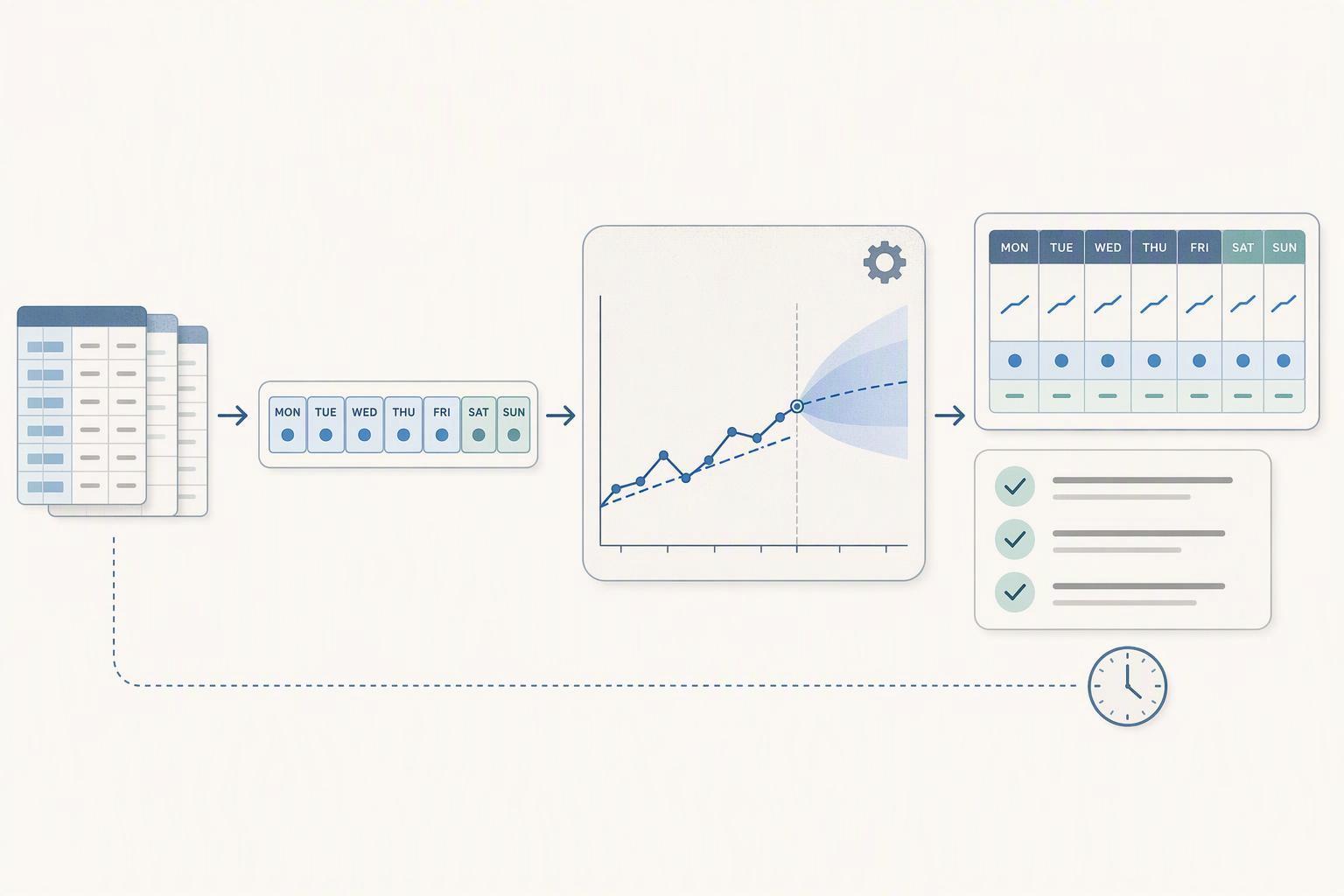

Real-Time Forecasting Starts with Point-in-Time Correct Data
The Timestral release gives enterprise teams a forecasting model that emits 21 quantiles per time step from a context window of up to 32,768 steps
In-depth reviews of the latest digital products including smartphones, laptops, audio devices, and more to help you make informed decisions
The Timestral release gives enterprise teams a forecasting model that emits 21 quantiles per time step from a context window of up to 32,768 steps
Typing guarantees form, not trust. Five testable layers for governing enterprise data agents: correctness, calibration, permissions, audit.
How to evaluate web analytics and data analytics platforms: export ceilings, cadence, retention, metric ownership and seven buyer tests.
Build testable data governance controls: ownership, metric definitions, access, quality, lineage and agent consumption, each with a test and evidence.
Why sales and finance report different revenue, the inclusion rules behind it, and how a metric contract makes one revenue definition reusable.
Metric drift causes conflicting reports and unreliable AI agents. Learn to measure its cost, detect it, and contain it with versioned definitions.
An end-to-end implementation guide to making weekly forecasts accountable: register forecasting agents with named owners, compute delegated permissions as an intersection, gate irreversible actions, and keep an audit record that reconstructs every published number.
How to architect a Microsoft Fabric data agent for weekly forecasting: separate the forecasting engine from the agent, pin the weekly data contract, store revisions for point-in-time comparison, and validate answers before publication.
Design a reliable automated weekly forecasting pipeline: enforce cutoff and restatement rules, use rolling-origin backtests, govern metric definitions, and audit overrides.